Title: Navigating Partnerships with INGOs: Lessons, Challenges, and Opportunities for Locally Led Humanitarian Action
Author: Sisay Dejene
Organization: Ethiopian Humanitarian National CSOs Forum (EHNCF)
Reference: INGO/LNGO 00/07/18/2025
Target Audience: Humanitarian Actors – INGOs, LNGOs
Research Article
Introduction
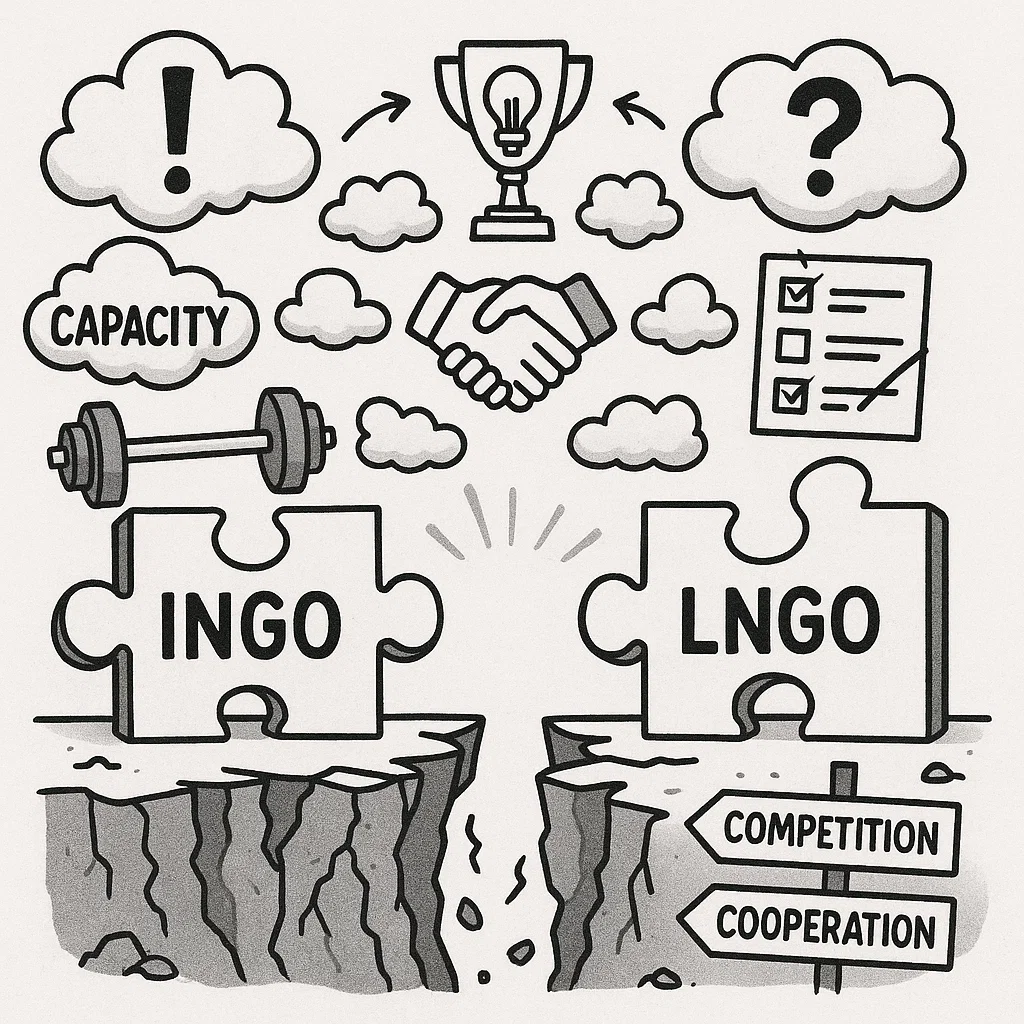
One of the enduring challenges within Ethiopia’s humanitarian landscape is fostering genuine collaboration between international and local non-governmental organizations (INGOs and LNGOs). While both actors are committed to saving lives and serving vulnerable communities, their relationships are often strained by competition, power asymmetries, and trust deficits-a concern explicitly acknowledged in the Ethiopia Humanitarian Fund (EHF) strategy.
Capacity gaps exist on both sides, and isolated instances of non-compliance with national frameworks may occur. However, these should not overshadow the integrity and commitment of the majority. The Ethiopian Humanitarian National CSOs Forum (EHNCF) seeks not to assign blame, but to illuminate the structural and relational dynamics that shape these partnerships. Through member reflections and field insights, this brief explores what is working, what remains challenging, and how we can collectively advance a more locally led humanitarian system.
Good Practices: What’s Working in INGO-LNGO Partnerships
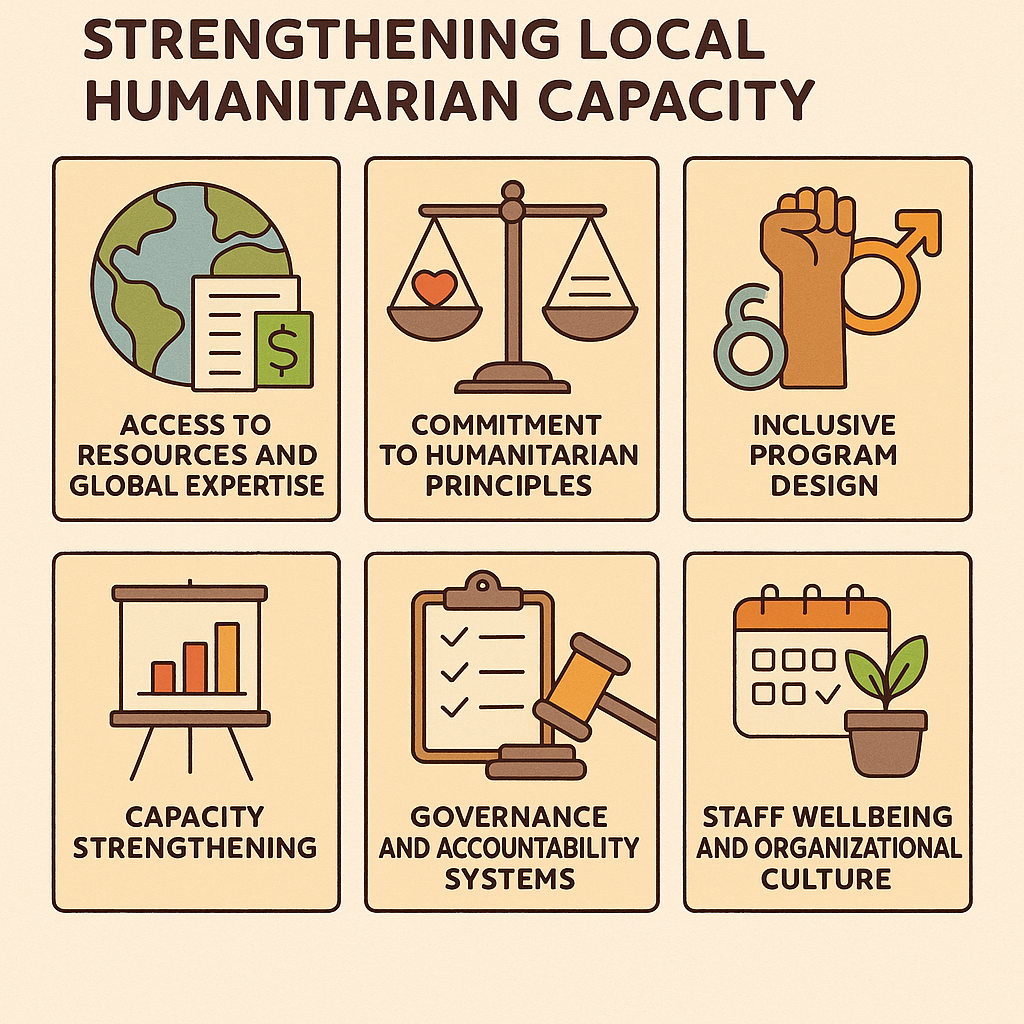
Despite systemic constraints, many INGOs have made meaningful contributions to strengthening local humanitarian capacity.
Key practices include:
Access to Resources and Global Expertise: INGOs have facilitated access to financial and technical resources, enabling LNGOs to adopt global best practices tailored to local realities.
Commitment to Humanitarian Principles: INGOs have supported LNGOs in upholding impartiality, neutrality, and needs-based targeting-enhancing the credibility and fairness of aid delivery.
Capacity Strengthening: Initiatives such as Welthungerhilfe’s ToGETHER program have invested in organizational development-improving planning, implementation, monitoring, financial systems, and sustainability.
Staff Wellbeing and Organizational Culture: Practices such as staff retreats, competitive benefits, and supportive work environments have contributed to resilient and motivated teams.
Inclusive Program Design: Some INGOs have prioritized disability inclusion and gender equity, ensuring marginalized voices shape program outcomes.
Governance and Accountability Systems: INGOs have supported the development of robust policies in procurement, HR, child protection, and codes of conduct-enhancing transparency and compliance.
Persistent Challenges to Equitable Partnerships
While progress is evident, several barriers continue to limit the full realization of locally led humanitarian action:
Power Imbalances and Donor Dependency: INGOs often retain decision-making authority due to financial control, treating LNGOs as implementers rather than strategic partners. Donor priorities may override local needs, undermining sustainability.
Administrative and Reporting Burdens: Complex reporting requirements-often in foreign languages-consume time and resources that could be directed toward service delivery and innovation.
Cultural and Communication Gaps: Limited contextual understanding and language barriers can result in misaligned interventions and undervaluing of local expertise.
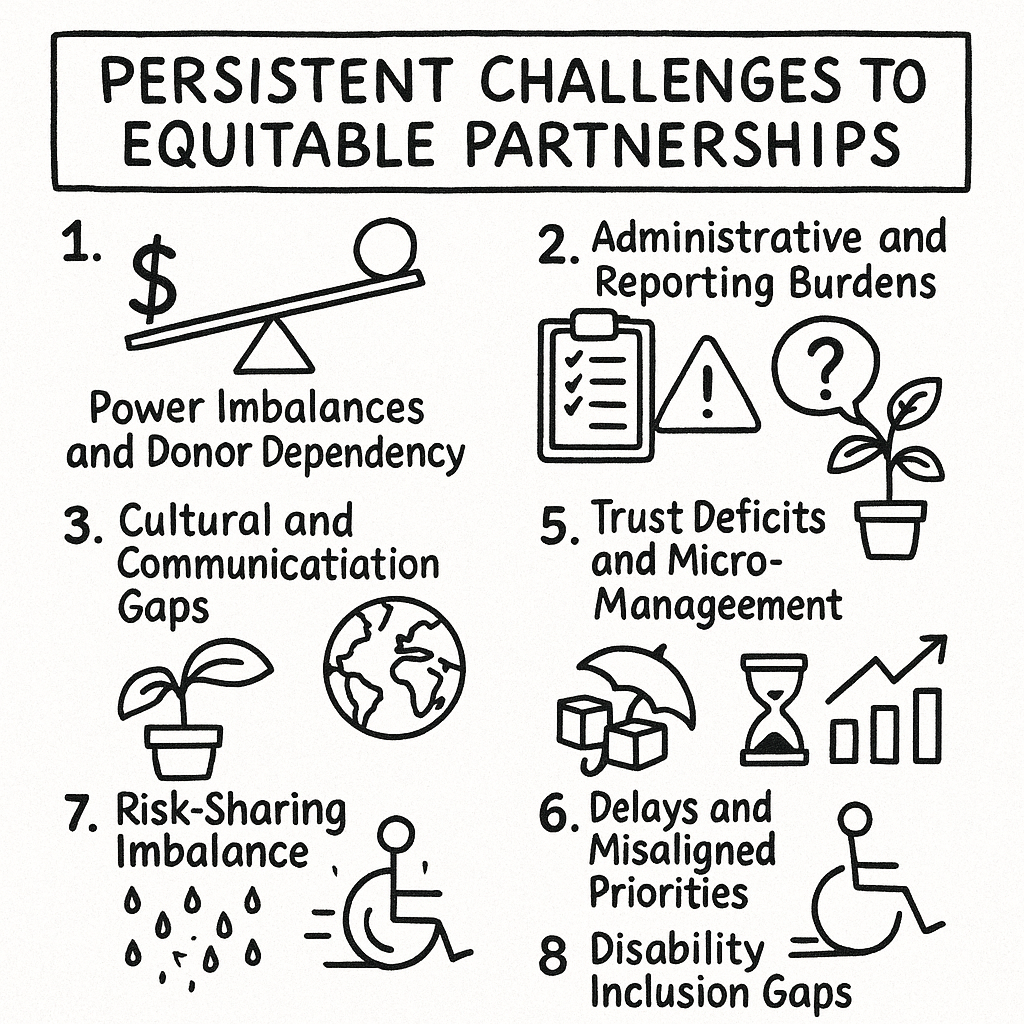
Capacity and Sustainability Constraints: Infrastructure gaps, staffing limitations, and short-term project cycles hinder long-term growth and resilience of local organizations.
Trust Deficits and Micro-Management: Despite years of successful collaboration, some INGOs continue to exercise excessive oversight, undermining autonomy and confidence.
Delays and Misaligned Priorities: Financial disbursement delays and a preference for “software” (e.g., training) over “hardware” (e.g., infrastructure) often disrupt implementation and fail to meet urgent community needs.
Risk-Sharing Imbalance: INGOs frequently shift operational and reputational risks to LNGOs without equitable accountability mechanisms.
Disability Inclusion Gaps: Some programs adopt generic approaches to disability, lacking disaggregated data and failing to co-design with Disabled Persons Organizations (DPOs).
Towards Transformative artnerships
To move beyond transactional relationships, INGOs and donors must commit to transformative partnerships grounded in mutual respect and shared leadership. Key shifts include:
Promoting Local Ownership: Empower LNGOs to lead program design and decision-making processes that reflect community priorities.
Investing in Capacity Building: Provide flexible, long-term resources that strengthen institutional resilience and foster innovation.
Fostering Open Communication: Establish transparent platforms for dialogue, feedback, and collaborative problem-solving.
Developing Sustainable Funding Models: Support funding diversification and transition strategies that reduce dependency and enhance autonomy.
Building Equitable Partnerships: Recognize the legitimacy, contextual knowledge, and technical expertise of local actors as equal to international counterparts.
Conclusion
By embracing these values, INGOs and LNGOs can co-create solutions that address both immediate humanitarian needs and long-term systemic change-delivering aid that is locally driven, contextually relevant, and truly transformative.
INGOs have played a vital role in Ethiopia’s humanitarian response. However, the next frontier lies in building partnerships that are not only effective-but also just, inclusive, and sustainable. Trust, humility, and shared leadership must become the foundation of future collaboration.
Contact
Ethiopian Humanitarian National CSOs Forum (EHNCF)
E-mail: sisay.d@ehnnf.org
Website: https://ehnnf.org/

Leave a Reply to A WordPress Commenter Cancel reply